

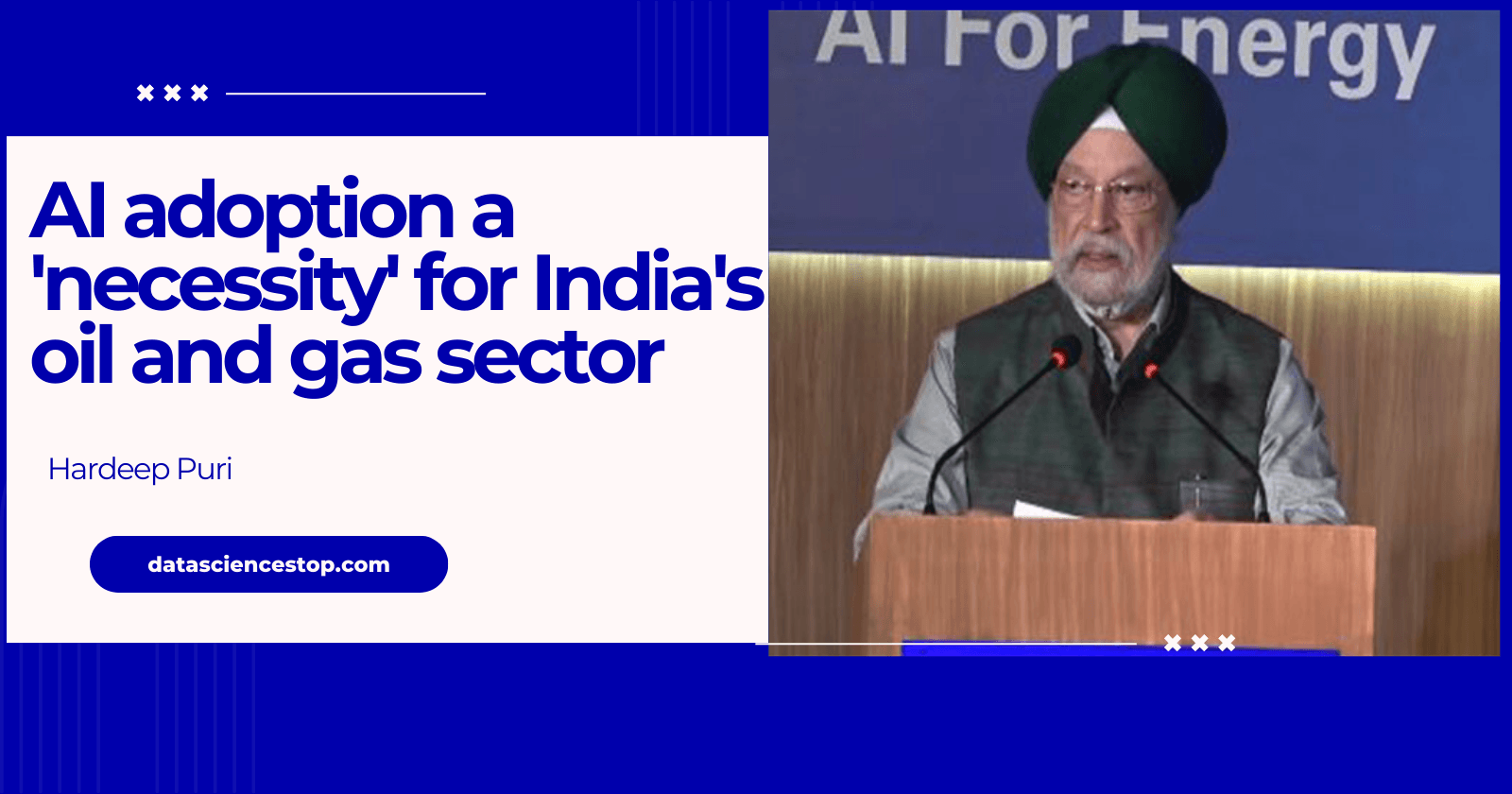
AI adoption a 'necessity' for India's oil and gas sector: Hardeep Puri
Search for a command to run...
No comments yet. Be the first to comment.
ChatGPT's innovative new shopping tools are revolutionizing internet shopping through bespoke recommendations, streamlined searching, and future-proof

Alibaba's cutting-edge Qwen 3 AI raises the bar in China's competitive tech scene with hybrid reasoning, multi-language capabilities

our comprehensive guide to HiggsFieldAI, StanfordAI, GenSpark, Veo2, Hunyuan3D, Adaptive AI, and Seedream 3.0. Discover their unique purposes, features, and potential. The AI landscape is ever-changing, with new platforms and tools developing at bre...

Discover features, advantages & disadvantages, and tips to select the perfect tool for your creative purposes—no design expertise needed!

Perplexity AI's latest iOS Voice Assistant transforms on-device AI activities—book a reservation, send an email, play media & more with voice commands. A Siri alternative with real-time web search and multi-app integration Perplexity's voice assista...

AI adoption a 'necessity' for India's oil and gas sector: Hardeep Puri
Indian oil and gas is on the edge of a tectonic shift, and AI adoption has been termed "critical necessity" by Hardeep Puri, India's Minister of Petroleum and Natural Gas. As a sector facing both the increased pressure of rising energy demand and environmental concerns, AI can be deployed as that absolutely crucial tool for boosting efficiencies and ensuring sustainability in operations.
The oil and gas industry has historically seen the presence of complex operations with high impacts on the environment but integration of AI technologies is changing the landscape. Recent reports indicate that companies are applying this technology to perform various applications such as identification of exploration sites, subsurface engineering, optimizing drilling processes and others.
For example, Cairn, the oil and gas arm of Vedanta, has used the digital twins-of the company-the AI-powered digital property-collaborations that reduced the flaring by 30% and optimized fuel gas consumption by 18%.
Finally, in addition to productivity gain and predictive maintenance, AI capabilities would further help optimize operational efficiencies. AI has the exceptional privilege of analyzing sensor and IoT data and predicting machinery failures before they occur, reducing down time and hence ensuring output.
Huge implications for economies are also derived from AI adoption. It has been observed that organizations bringing AI solutions to the oil and gas sector have achieved more than 10% savings in cost and downtime. What's more, AI is expected to significantly add to India's GDP, with estimates expecting AI to contribute approximately $450-500 billion by 20253. This amount is about 10% of the ambitious $5 trillion GDP plan for India.
Adds Hardeep Puri, "Though the sector is one of the most bothersome sectors when it comes to issues like emissions management, etc., yet AI shall provide the optimal path in overcoming all those issues most effectively. Hardeep Puri used data analytics and machine learning to achieve hyper-efficiency-from optimizing processes to meeting sustainability goals.
Despite this glimmer of hope in AI to the oil and gas industries, there are some downsides. While AI technologies pick up faster, it still requires a strong IT structure to support new increased requirements for data processing. It was recently found that one of the top issues according to most organizations is the energy demands increasing due to implementing AI. With this, sustainable energy-efficient systems are essential investments such that none of the benefits derived from AI compromise sustainability.
There's also an urgent call to collaboration between stakeholders within the industry. As companies experiment with more elaborate applications of AI-from process refinements to customer experience-a confluence of best practices and insights shared with one another is a must in order to unlock the full potential of this technology.
AI adoption in India's oil and gas sector is a need rather than a choice for the innovative development that the minister, Hardeep Puri, claims will bring great operational efficiency gains addressing some of the environmental concerns. With further investments made in technological and infrastructural areas, India seems to have risen to a leadership role in integrating AI with its oil and gas industries.
Oil and gas companies dig deep for AI gold - The Economic Times
How AI Powers the Future of the Oil and Gas Industry | ValueCoders
AI adoption soars in India but energy demands threaten sustainability - Pure Storage
The Growing Role of AI in Accelerating Clean Energy Transition | GEP Blog

