

Everyone's jumping on the AI doll trend - but what are the concerns?
The AI doll trend has seen a sharp increase in popularity, fascinating many with customisable avatars that resemble users' looks.


The rise of AI dolls is taking the internet by storm. These digital avatars, powered by advanced technology like chatgpt ai, are captivating users with their customizable features and lifelike designs. But as more people jump on this trend, it's essential to pause and consider the ramifications that come with it. What are we really sacrificing for our virtual companions? Let's explore the intriguing world of AI dolls while uncovering underlying concerns that demand our attention.
How does the AI doll generator work?
The AI doll phenomenon is transforming online interactions, combining creativity with technology. This piece explores its swift popularity, the processes involved in creating distinctive avatars, and the urgent issues of privacy, societal beauty norms, and regulatory loopholes. We will also look at the implications for OpenAI's innovations in this area.
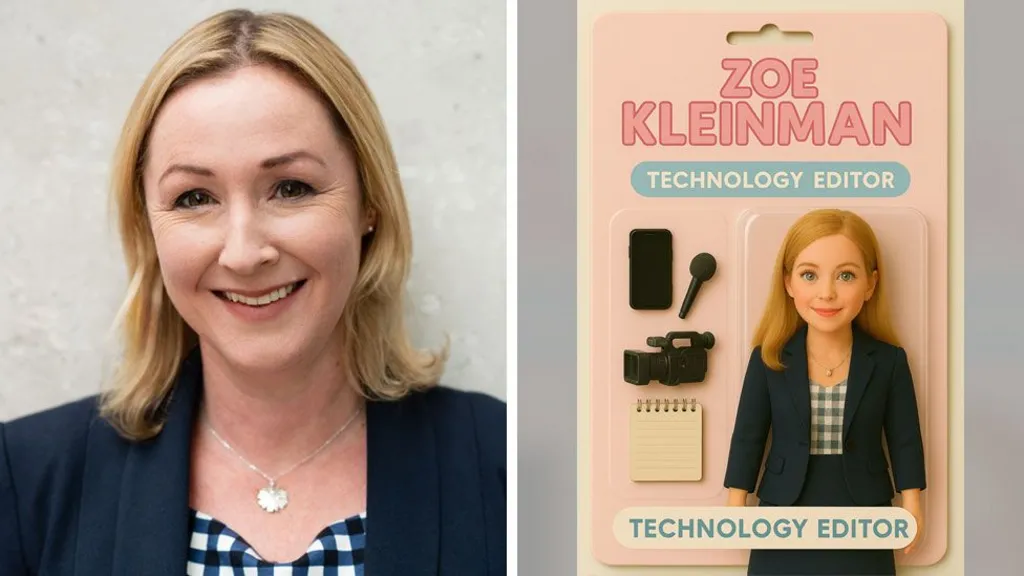
Virtual friends are said to heighten user engagement and customisation and bring a new mix of technology and creativity. The more interest there is, the more there is a discussion about what its implications are.
The trend in AI dolls has soared, and countless users are crafting custom avatars with the use of applications and platforms. They utilize applications with machine learning programs to edit photographs into singular digital dolls. These digital marvels are spread all over social media, with each posting making the activity appealing enough to induce other users to be a part of it.
"Generative AI makes it easier and quicker for people to create and jump on trends," says Jasmine Enberg, principal social media analyst at eMarketer.
The emergence of AI dolls raises serious alarm. Privacy concerns are raised regarding the use of personal photos for avatars. There is also fear of affecting beauty standards within society, as these online figures might reinforce unrealistic beauty standards. Furthermore, the absence of legislation questions ethical application and responsibility.
Employing personal pictures to design AI dolls is of major privacy issues. Most people will unknowingly share their pictures, and hence their images can be used without authorization. Identity theft and tampering become higher risks as these virtual representations spread online, necessitating stronger consent measures in this emerging trend.
AI technology is affecting societal beauty standards by creating idealized avatars. These digitally created images tend to emphasize unrealistic features, influencing self-esteem and body image. With individuals comparing themselves to these AI-generated images, a skewed view of beauty is produced, resulting in greater pressure for conformity of appearance.
Testing the AI doll trend
Prompt to generate AI Doll for DataScienceStop:
A hyper-realistic, futuristic AI doll with smooth skin, large expressive eyes, and a sleek, slightly metallic sheen. The doll has a friendly, intelligent expression and a soft glow emanating from subtle circuit patterns on her face and neck. She’s holding a digital sign or tablet that says "DataScienceStop – A Place to Know AI Trends". The background is a stylish sci-fi interface with holographic elements and a glowing brain or neural network pattern. The overall color theme is cool-toned with neon blues, silvers, and subtle purples, giving it a clean, advanced tech vibe.

The AI doll phenomenon has great implications for concerns regarding privacy, cultural beauty norms, and non-regulation. As more and more people become users of the technology, there is a critical need to weigh these issues with care. It has implications far beyond individual applications, influencing general cultural attitudes and ethical limits on AI design.
Another Example
"DataScienceStop Barbie – Powered by ChatGPT & AI Trends"
Visual Description / Prompt:
A stylish, futuristic Barbie-inspired AI doll, branded as “DataScienceStop Barbie.” She has a sleek, cyber-chic outfit with circuits and holographic patterns, holding a mini laptop with ChatGPT on the screen. Her accessories include smart glasses, a digital assistant bracelet, and a mini book titled "AI Trends 2025." The background is a glam-tech lab with a glowing neural network, charts, and dashboards. The theme colors are hot pink, silver, and electric blue. She strikes a confident, intelligent pose, with a holographic banner that says:
“DataScienceStop – Where Barbie learns about AI trends with ChatGPT.”

Example:
Create image. Create a toy of the person in the photo. Let it be an action figure. Next to the figure, there should be the toy's equipment, each in its individual blisters. 1) A Laptop. 2) Java 3) Kotlin 4) android Studio 5) Firebase 6)Sqlite 7) MVVM. Don't repeat the equipment under any circumstance. The card holding the blister should be light blue. Also, on top of the box, write '{NAME}' and underneath it, 'Android Developer'. The figure and equipment must all be inside blisters. Visualize this in a realistic way."

Conclusion
The trend of AI dolls is not well regulated or monitored, creating ethical concerns regarding practices. Since technology is changing at a very fast pace, businesses can make avatars very realistic without specific guidelines. Such a lack of regulation exposes customers to possible exploitation and misuse of their personal data during the making process.
References
Lifelike sex robots could present ethical issues, experts warn
Generation AI: What happens when your child's friend is an AI toy that talks back?


