
OpenAI Battles DDoS Against Its API and ChatGPT Services: A Chronicle of Resilience
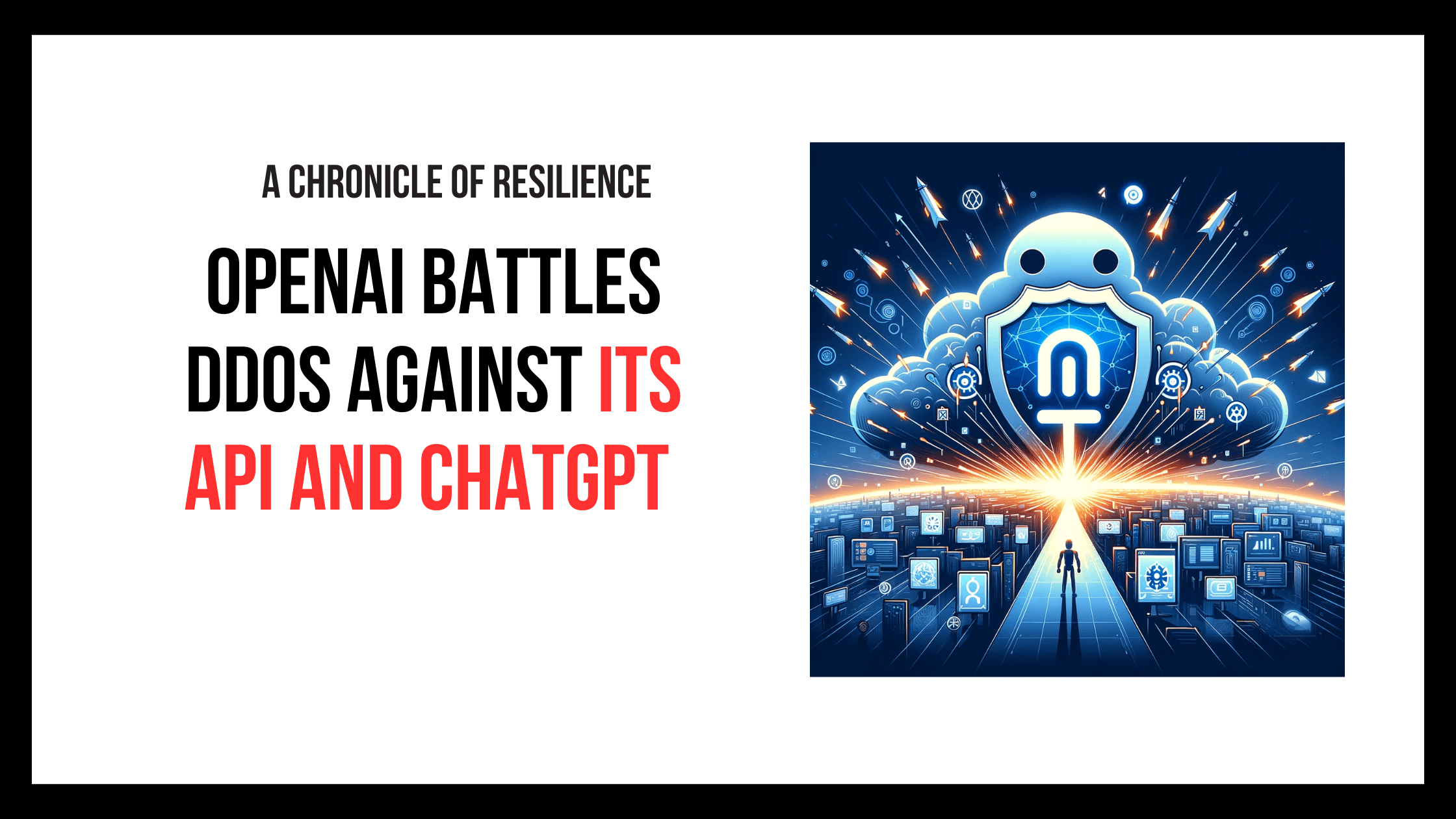
In the ever-evolving realm of artificial intelligence, where groundbreaking innovations redefine the boundaries of the possible, OpenAI stands as a beacon of technological advancement. However, even amidst its groundbreaking achievements, OpenAI has faced a formidable challenge in the form of a relentless distributed denial-of-service (DDoS) attack targeting its API and ChatGPT services. This malicious onslaught, aimed at disrupting access to these crucial tools, has tested the resilience of OpenAI and highlighted the growing cybersecurity threats in the AI landscape.
A Storm of Disruption
The DDoS attack, unleashed by an unidentified group, sought to overwhelm OpenAI's infrastructure with a deluge of illegitimate traffic, effectively rendering the API and ChatGPT services inaccessible to legitimate users. This disruption had a significant impact on developers and businesses that rely on these services for tasks such as customer service, chatbot development, and content creation.
Navigating the Storm: OpenAI's Response
Undeterred by the attack, OpenAI swiftly mobilized its team of experts to combat the malicious traffic and restore normal service. The company implemented a series of countermeasures, including rate limiting and traffic filtering, to divert the flood of illegitimate requests and protect its infrastructure.
Despite the attackers' persistent efforts to adapt and evolve their tactics, OpenAI demonstrated remarkable resilience in its ongoing battle against the DDoS attack. The company's unwavering commitment to protecting its services and ensuring continued access for its users was evident throughout this challenging period.
The Ripple Effect: Impact Beyond OpenAI
The DDoS attack on OpenAI extended its reach beyond the immediate disruption of its services. The attack served as a stark reminder of the growing cybersecurity vulnerabilities in the AI space, where the potential for malicious actors to inflict significant damage is ever-present.
The ripple effects of the attack were felt by companies and developers who rely on OpenAI's technology. Developers who integrated ChatGPT into their applications experienced disruptions, potentially leading to revenue loss and reputational damage. The attack also raised concerns among businesses contemplating the adoption of AI-powered solutions, highlighting the need for robust cybersecurity measures.
A Call for Collaboration: Addressing the Cybersecurity Challenge
The DDoS attack on OpenAI underscores the pressing need for increased collaboration among AI companies, industry bodies, and governments to address the growing cybersecurity threats in this domain. By sharing knowledge, developing standardized security protocols, and fostering a culture of information sharing, the AI industry can collectively strengthen its defenses against malicious actors.
OpenAI's Resilience: A Beacon of Hope
OpenAI's unwavering commitment to mitigating the DDoS attack and restoring normal service serves as a testament to the company's resilience and dedication to its users. By demonstrating its ability to navigate such a challenging situation, OpenAI has set a benchmark for other AI companies facing similar threats.
Conclusion: A Shared Responsibility for a Secure AI Future
The DDoS attack on OpenAI is a stark reminder that cybersecurity is not the sole responsibility of individual companies. It requires a collaborative effort involving the AI industry, governments, and users. By working together, we can create a more secure and resilient AI ecosystem that empowers innovation while safeguarding against malicious actors.
The future of AI holds immense promise for transforming our world, but it is crucial to ensure that this transformation takes place within a secure and responsible framework. OpenAI's resilience in the face of the DDoS attack serves as an inspiration for the entire AI community to prioritize cybersecurity and work together to build a more secure AI future.