

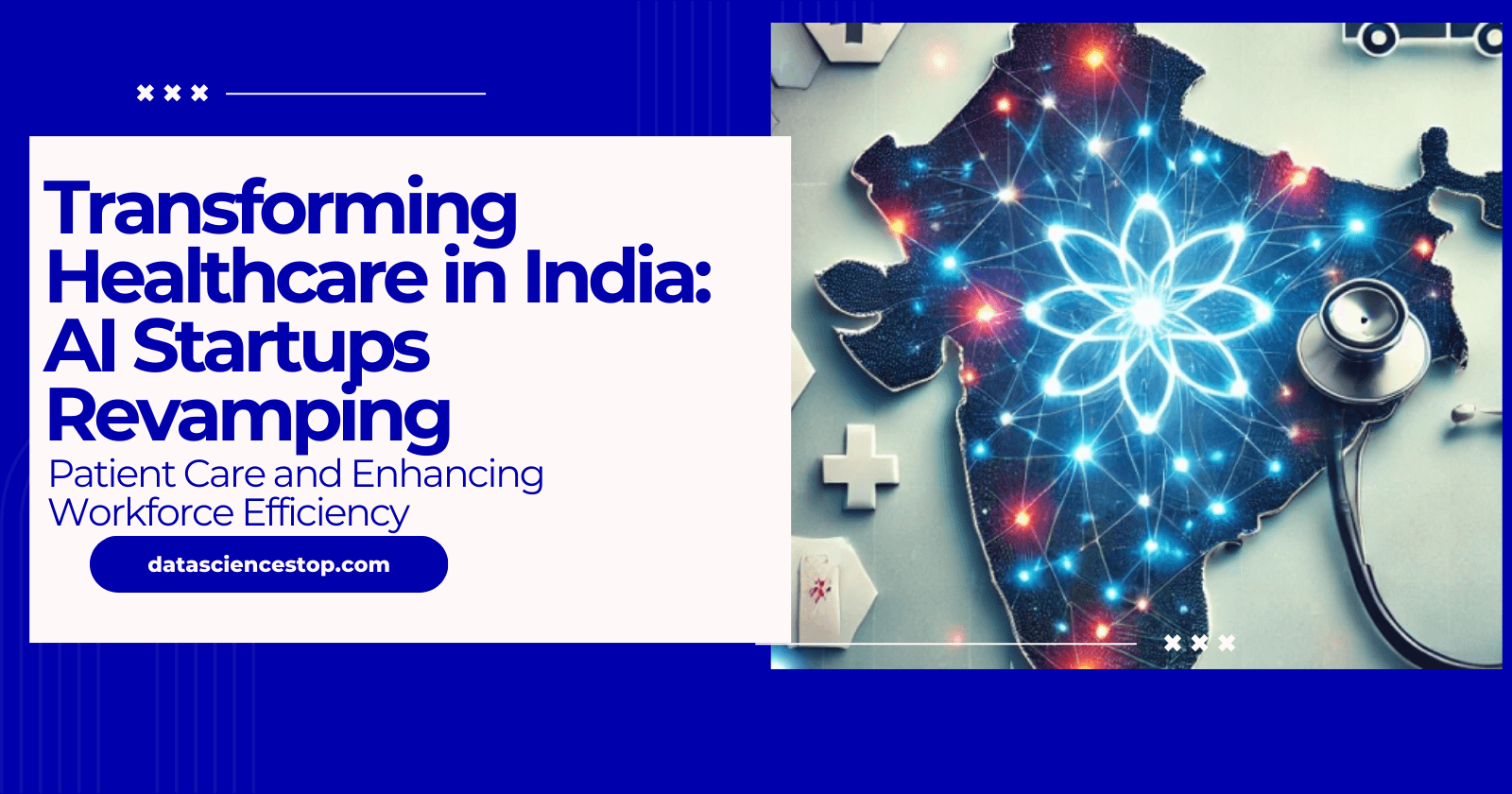
Transforming Healthcare in India: AI Startups Revamping Patient Care and Enhancing Workforce Efficiency
Search for a command to run...
No comments yet. Be the first to comment.
ChatGPT's innovative new shopping tools are revolutionizing internet shopping through bespoke recommendations, streamlined searching, and future-proof

Alibaba's cutting-edge Qwen 3 AI raises the bar in China's competitive tech scene with hybrid reasoning, multi-language capabilities
our comprehensive guide to HiggsFieldAI, StanfordAI, GenSpark, Veo2, Hunyuan3D, Adaptive AI, and Seedream 3.0. Discover their unique purposes, features, and potential. The AI landscape is ever-changing, with new platforms and tools developing at bre...

Discover features, advantages & disadvantages, and tips to select the perfect tool for your creative purposes—no design expertise needed!

Perplexity AI's latest iOS Voice Assistant transforms on-device AI activities—book a reservation, send an email, play media & more with voice commands. A Siri alternative with real-time web search and multi-app integration Perplexity's voice assista...
Transforming Healthcare in India: AI Startups Revamping Patient Care and Enhancing Workforce Efficiency
Indian AI startups are working increasingly on the hottest issues in the health care sector, which ranges from the insurmountable deficit in healthcare professionals and increasing patient care. Indian hospitals range across several shortcomings, from a dramatic doctor-to-patient ratio imbalance and lack of resources that have served as an impetus for innovative AI solutions. This article outlines how Indian startups are transforming healthcare delivery in India.
Therefore, an existing unbalanced scenario relating to the supply of health professionals and the rising demand for such services prevails in India. The doctor-to-patient ratio stands at about 1:1511, which is highly elevated when compared with the World Health Organization's recommended ratio of 1:1000[4]. With a huge aging population base along with high burdens of chronic diseases, there is a huge need for efficient healthcare delivery systems.
AI technologies are increasingly involved in various activities in addressing workforce shortages in the following ways:
1. Diagnostic Support
AI-driven diagnostic tools are making the workflows of healthcare professionals already on the rolls even more efficient. Take the case of companies like “Qure.ai” which uses deep learning algorithms to analyze medical images and thus saves precious hours in the diagnosis process. Its solution qER can quickly identify life-threatening conditions from CT scans, thereby freeing up space for timely intervention.
2. Telemedicine and Remote Monitoring
The pandemic made necessary the application of telemedicine solutions. Via AI, platforms “e-Sanjeevani” improve remote consultations and remote monitoring. It is now possible to access healthcare in farthest rural areas. Startups developed virtual assistants that help patients manage their health at home, thus pushing away some of the overburdened loads from hospital staff.
3. Automated Patient Management Systems
AI is also making it easy to handle administrative functions in hospitals. Start-ups are developing the systems that will automate scheduling and triage of patients with a view of reducing the burden on healthcare workers. The systems used employ machine learning algorithms to predict patient flow and, therefore, optimize resource utilization.
Besides this, AI startups work to improve patient care quality as a whole:
1.Treatment Plans according to Personalized Treatment Requirements
AI is trained to view detailed past-treatment records and accordingly recommend treatment plans to the patient. For instance, “Apollo Hospitals”has designed AI-based predictive solutions that generate predictions based on millions of health records put into a database and can predict possible health risks and recommend precautionary measures.
2. Early Detection of Diseases
Innovative start-ups like “Niramai” are using machine learning for early-stage cancer detection even without a need to use non-invasive methods. The technology can identify even early-stage breast cancer without exposing the patients to radiations, which makes the process much safer and more accessible
The National Digital Health Mission was launched by the government of India as a mission to create electronic health records for all citizens, interoperable among themselves. This will allow seamless data sharing between providers and enhance continuum of care when their patients seek care at other facilities across the country These records could be analyzed by AI tools for trends that help in improving health outcomes.
Doctor-Patient Ratio: The doctors to patients ratio in India is approximately 1 :1511 as compared to WHO prescribed ratio of 1:10001
AI for Diagnostics: Deep learning algorithms can be used by start-ups such as Qure.ai for providing research-based information from medical images, thereby fastening the diagnosis time.
Telemedicine: During COVID-19 pandemic, the installation of telemedicine solutions in India took a giant leap. For example, through AI, e-Sanjeevani enhanced patient remote consultation and monitoring.
Early Detection of Disease: Niramai is such an example where innovative start-ups are using machine learning for the early detection of cancer. It does so by non-invasive methods, thus making screenings safer and more accessible.
While the opportunity for AI in the Indian healthcare sector is quite large, the following challenges need to be conquered:
Data Privacy Issues
Collecting and using health data involving an individual's private information poses critical privacy issues, and thus it has to be handled safely yet available for analysis in order to increase patient trust.
Regulatory Challenges
As of yet, the Indian regulatory landscape for AI in health care is not developed. Some guidelines and regulations will be needed to ensure that standards of safety are maintained at the cheapest expense of innovation.
Infrastructure Challenges
Advanced AI technologies can't yet reach much of rural India due to lack of infrastructure. Investments in technology and in training will be needed to bridge such gaps and ensure equitable access to healthcare innovations.
More than 5000 startups are currently working on various AI applications in healthcare, pointing towards a healthy ecosystem ready to tackle pressing challenges
Private company collaborations and government initiatives spur an environment conducive to innovation.
Healthcare in India shall be revolutionized by upgrading AI technologies. As AI is further developed, it would be more decisive in driving India's healthcare landscape higher on the dimensions of efficiency, access, and quality of care.
AI startups take up most of the most relevant challenges that face Indian hospitals, the most significant of which are workforce shortages and improvements in patient care. With advanced technologies being used for diagnostics, telemedicine, and personalized treatment plans by these companies, not only are the operational efficiencies improved but also the health outcomes for the patients nationwide. With the regulatory framework changing often and infrastructure getting better, integration of AI in Indian healthcare is sure to grow into a multi-billion industry in the coming years, thus promising an easier and efficient system for all the citizens. It is in the health sector of India where strategic partnerships and continued innovation can collectively unlock the full potential of AI technologies to create a model that could sustain a climate of meeting the vast diversity of needs in this country.
AI in Healthcare in India: Applications, Challenges and Risks
How Startups Are Leading the AI Revolution in Indian Healthcare
More Recent Articles
