

What Is Multimodal AI? A Complete Introduction
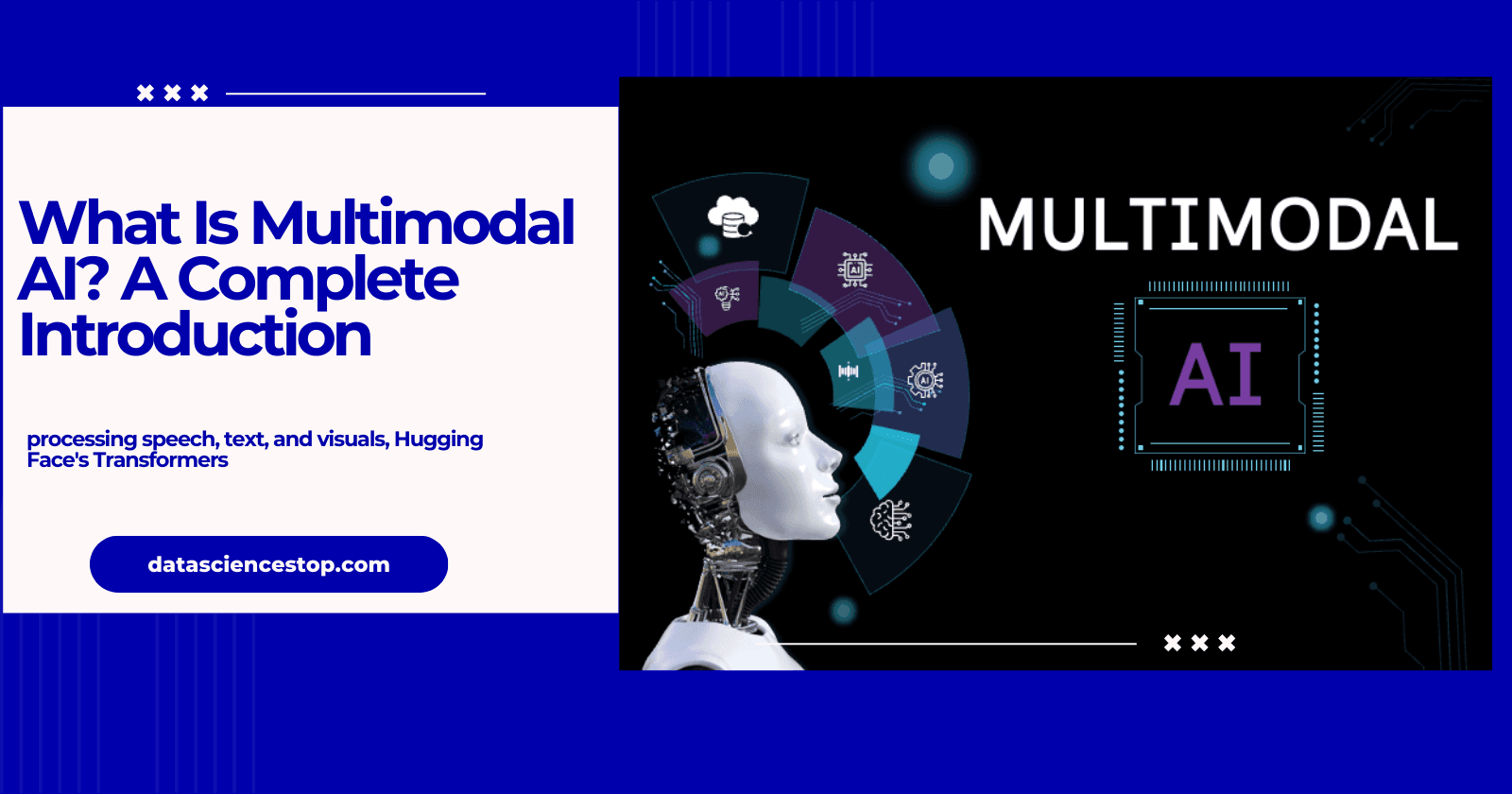
By processing speech, text, and visuals, Hugging Face's Transformers can support multimodal learning and create flexible AI systems.
Search for a command to run...
By processing speech, text, and visuals, Hugging Face's Transformers can support multimodal learning and create flexible AI systems.
No comments yet. Be the first to comment.
ChatGPT's innovative new shopping tools are revolutionizing internet shopping through bespoke recommendations, streamlined searching, and future-proof

Alibaba's cutting-edge Qwen 3 AI raises the bar in China's competitive tech scene with hybrid reasoning, multi-language capabilities

our comprehensive guide to HiggsFieldAI, StanfordAI, GenSpark, Veo2, Hunyuan3D, Adaptive AI, and Seedream 3.0. Discover their unique purposes, features, and potential. The AI landscape is ever-changing, with new platforms and tools developing at bre...
Discover features, advantages & disadvantages, and tips to select the perfect tool for your creative purposes—no design expertise needed!
Perplexity AI's latest iOS Voice Assistant transforms on-device AI activities—book a reservation, send an email, play media & more with voice commands. A Siri alternative with real-time web search and multi-app integration Perplexity's voice assista...
Hugging Face's Transformers are tools that can work with speech, text, and images. They help with multimodal learning, which means learning from different types of data, and they build flexible AI systems.
These Transformers can handle speech, text, and pictures. Because of this, they support multimodal learning and help create more advanced AI solutions.
Welcome to the exciting world of multimodal AI. This kind of artificial intelligence can understand and process different kinds of information at the same time. It can work with images, text, and sounds all together. This makes it very useful for many tasks.
Consider multimodal AI as a sophisticated machine that doesn’t just analyze images or text, but does both simultaneously to make better sense of the situation. With this capability, AI is able to perform complex tasks like sentiment recognition from speech and facial movements.For reference see this video
https://www.youtube.com/watch?v=EtEOFR3Sp74
Multimodal AI is all the rage in a number of industries, and for good reason. Here are some practical examples of how the technology is being applied:
Healthcare: In medicine, multimodal AI is able to analyze patient information from multiple sources such as clinical documentation, radiology images, and laboratory tests. This integrated analysis helps in delivering precise diagnoses and treatment plans.
Creative Industries: In advertising and movie making, multimodal generative AI is capable of producing content that naturally integrates text, images, and audio, producing immersive multimedia experiences optimized for a wide range of audiences.
Education and Training: AI systems are able to produce educational content that adjusts to various learning modes, providing text descriptions, diagrams, and interactive audio descriptions at the same time.
Customer Service: Picture a chatbot that not only answers text questions but also picks up tone of voice and facial expressions. This can make communication more effective by offering proper verbal and visual feedback.
Benefits of Multimodal AI
Moving forward into multimodal AI, it's vital to note the advantages this technology has to offer:
Improved Comprehension: Processing more than one type of data, multimodal AI has the ability to gain a richer comprehension of human contexts, making it better overall.
Enhanced Decision-Making: Combining varied data sources enables AI systems to make better-informed decisions, especially in uncertain real-world scenarios.
Rich User Experiences: Multimodal AI makes human-machine interaction more natural, leading to richer user experiences and higher user satisfaction and engagement.
Improved Creativity: In the creative arts, AI can create innovative pieces of content by integrating multiple media forms, providing fresh avenues of artistic expression.
Photo by Tim Arterbury on Unsplash
Although the benefits of multimodal AI are strong, challenges also confront researchers and developers:
Data Integration: Synchronizing and integrating varied data types may be complicated because each modality can have disparate formats and natures.
Privacy Issues: Multimodal AI tends to involve processing of personal, sensitive information, and this raises ethics questions regarding user privacy and data protection.
Model Training Complexity: Complex training of models capable of well-fusing several types of data involves lots of resources and know-how.
Bias and Fairness: Similar to all AI, multimodal AI can inherit bias in the training data, which can result in outcomes that are not equitable or fair.
Photo by ZHENYU LUO on Unsplash
On the whole, multimodal AI is transforming machines' perception of and interaction with the world. Through the aggregation of various modes of data, these systems are augmenting decisions, enriching user experiences, and creating new opportunities for imagination. Though the challenges persist, the potential of multimodal AI to revolutionize industries and quotidian technology is tremendous. While we keep harnessing these opportunities, the prospect of AI brighter than ever grows.
If you enjoyed this investigation of multimodal AI, don't forget to leave your feedback and experiences in the comments below!


